

Beginning today, February 24th, post a photo to Facebook or Twitter that best explains your personal reasons for refusing state tests and tag it #iRefuse. We want to know why you and your kids are refusing these state tests!
We have created a hashtag page to display your personal message. If you'd like, download this page and write your message to be included in your photo.
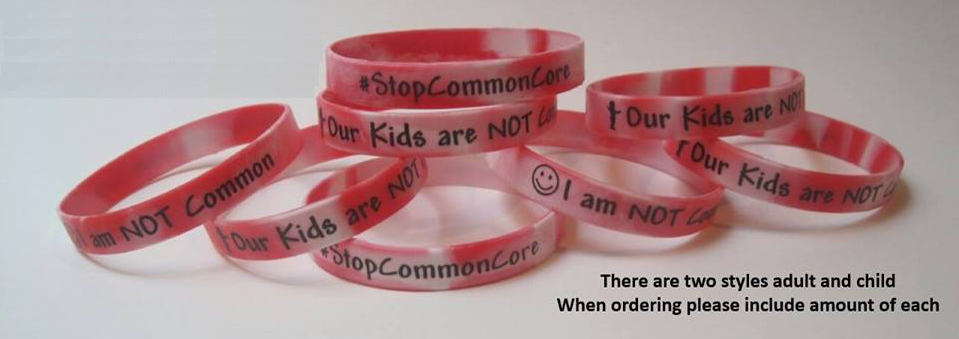
United2Counter will select 10 random winners to receive a "Bracelets That Are Not Common." Winner will receive the child's version, which reads "I am NOT Common!" with a Smiley face.
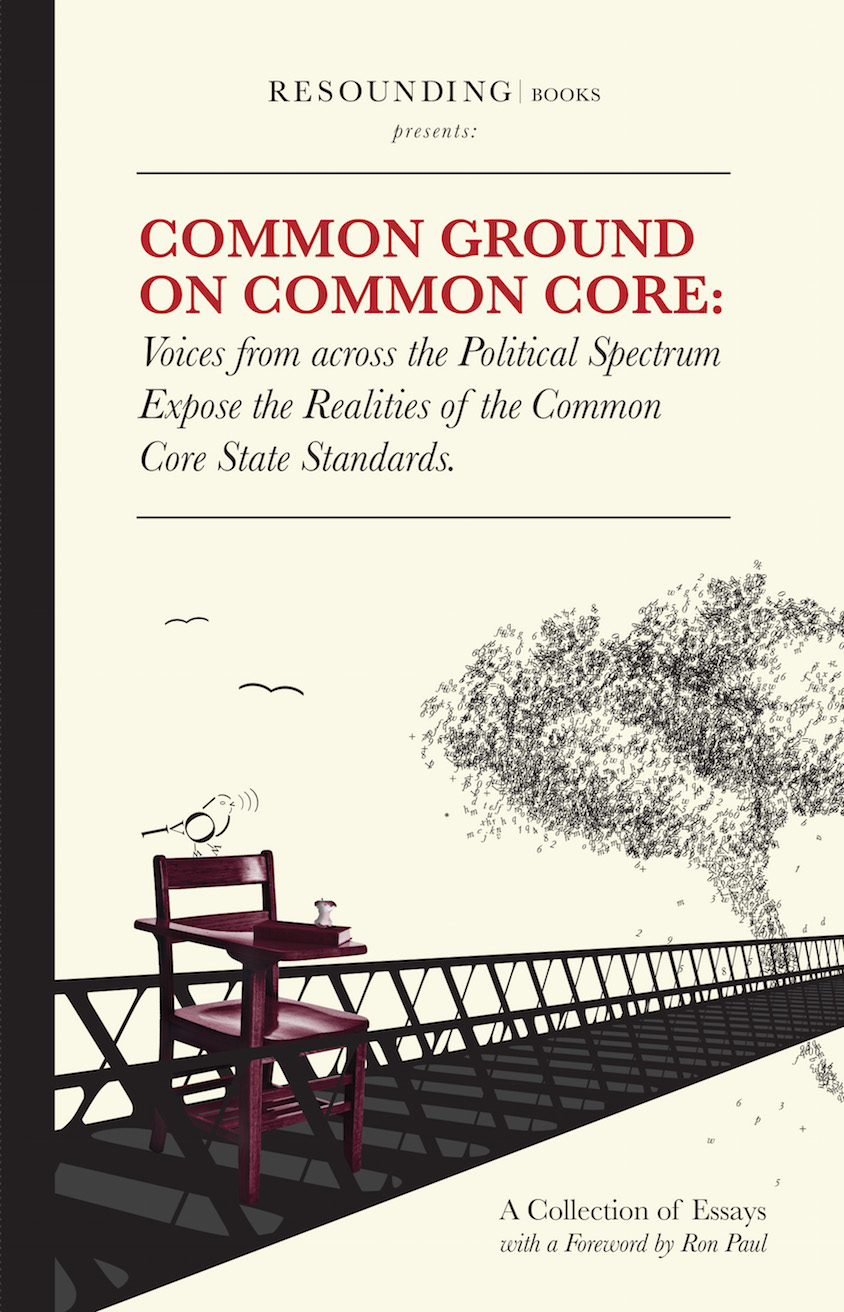
One grand prize winner will receive a copy of the book "Common Ground on the Common Core: Voices from across the Political Spectrum Expose the Realities of the Common Core State Standards" from Resounding Books.
Don't forget to download your test refusal letter! To be considered for the book or bracelets, photo entries must be received by March 27, 2015. We can’t wait to see your photos!

United2Counter.com proudly endorses Tim Farley for the next Education Commissioner of NY. Tim is an experienced educator/administrator, a tireless advocate for children and supporter of quality education in NY. He would make an outstanding leader . Please read his official letter of intent to the NYS Board of Regents.
December 14, 2014
New York State Education Department
Attention: Merryl Tisch, Chancellor
89 Washington Avenue
Board of Regents, Room 110 EB
Albany, New York 12234
E-mail: This email address is being protected from spambots. You need JavaScript enabled to view it.
Dear Chancellor Tisch,
Please consider this letter as my application for the recently vacated position, State Education Commissioner of New York. I am currently in my 23rd year in education and I am currently an Elementary/Middle School Principal in grades 4-8. The reason for my application is that I feel that I can offer you and the Board of Regents a new direction that I feel is desperately needed.

Local districts across the country are becoming increasingly vocal in regards to Common Core and overtesting. From Chicago to Florida to Colorado, teachers and administrators are refusing to go along quietly. Politicians are treating this like a proverbial hot potato, with Governor Cuomo denying any part of Common Core in Wednesday's NY Gubernatorial Election.
Keep up the pressure-we are being heard!
http://www.politico.com/story/2014/10/common-core-112144.html

One of the arguments we've heard for keeping the Common Core Standards includes performance concerns on SATs for students in non-aligned states for schools. Read about an increasing trend of competitive colleges and universities to do away with mandatory SATs as part of the admissions process. http://www.bloomberg.com/news/2014-10-03/wesleyan-temple-among-colleges-scrapping-admission-tests.html

From the article, "Common Core asks small children to behave like little adults, and they are not little adults..."
We risk a generation lacking the joy of learning and intellectual curiosity by overemphasizing achievment in kindergarten. This article raises the very real issue of stress among our youngest students, stress that may have been avoided had childhood educators and developmental experts been consulted in creating the standards.

Since the introduction of common core, educators and parents have reported that the new mathematical standards for our youngest students are developmentally inappropriate, while proponents accuse us of coddling our children. This article provides evidence, through MRI imaging, that children use different parts of the brain than adults while solving math problems. Forcing advanced concepts at a young age is not only useless, but it may have a negative impact on later problem solving abilities.
The purported goal of the Common Core Standards is equal competency across the country at each grade level. However, no provisions were made for the special needs population, with the exception of a series of vague instructions that they be provided with the "support services, individualized instruction and assistive technology they need for the rigor and high expectations of the Common Core State Standards." The author examines the challenges this population and their instructors face, as they attempt to work within the confines of a one-size-fits-all curriculum.
Navigation
Order "Refuse The Test Bracelets"
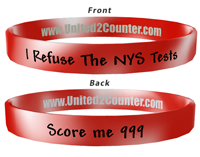
Download and Print Blank Refusal Forms

Latest Articles
- Refuse 2016
- Alternate Assessment Refusal Letter
- New York's Baffling Response to Parents Who Didn't Let Their Kids Take Common Core Tests
- Cost Woes Plague Common-Core Rollout
- Why Are the Rich So Interested in Public School Reform?
- After Debate, Regents Pass Teacher-Evaluation Rules
- In Mass., A Push to Let Voters Weigh In On the Common Core State Standards
- SAT Scores Hit New Low
- New York Lawmakers Weigh 'Opt-Out' Response
Popular Tags
Help Us Help You
$5
$10
$25
Your donation to support the operating costs of this website and marketing materials is greatly appreciated.